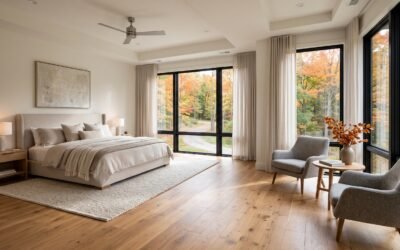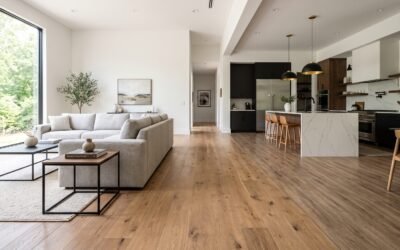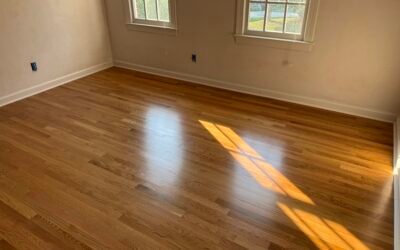

When planning a home remodel in the North Carolina Triangle, many homeowners find themselves caught between two appealing surface options: the timeless architectural prestige of natural hardwood and the 100% waterproof resilience of Luxury Vinyl Plank (LVP).
Naturally, a common question arises during our home consultations: “Can you mix hardwood and LVP in the same house? Or will combining natural wood with vinyl look mismatched and cheap?”
The short answer is yes, you absolutely can mix hardwood and LVP in the same home. In fact, combining both materials is an increasingly popular design strategy that allows you to enjoy the organic elegance of authentic timber in formal living zones while deploying waterproof durability in splash-prone or high-traffic areas.
However, executing a multi-material layout successfully requires strict design rules and precise technical installation. As your local flooring advisor, here is how to seamlessly pair hardwood and LVP across your floor plan without sacrificing visual continuity.
Why Homeowners Combine Hardwood and LVP
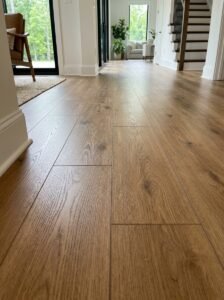
Designing a home isn’t about forcing one surface material into every single room; it’s about matching the material to each room’s daily routine and structural demands.
- Hardwood for Formal Living Zones: Natural timber brings warmth, prestige, and permanent real estate equity to foyers, formal dining rooms, and primary living areas. To explore why genuine wood remains the premier choice for main levels, review our guide on why genuine hardwood flooring remains the gold standard.
- LVP for Wet and High-Traffic Zones: Kitchens, mudrooms, laundry spaces, and basements face daily water splashes, wet shoes, and heavy foot traffic. Installing high-grade rigid-core LVP in these zones provides total peace of mind against standing liquids and scratch damage. For technical material specifications, review our complete guide on LVP installation.
Key Design Rules for Mixing Hardwood and LVP
When mixing natural wood and composite planks, avoiding visual conflict comes down to three fundamental design principles:
1. Don’t Try to “Fake” an Exact Match
The biggest mistake homeowners make is choosing an LVP product that attempts to clone the exact species, grain, and color of their adjacent hardwood floor. Synthetic materials never match natural wood 100% under varying light conditions. A near-miss looks like an accidental mistake. Instead, embrace intentional contrast—pair a rich, dark oak hardwood in the living room with a lighter, neutral-toned LVP in the kitchen or mudroom.
2. Respect Undertones
While you should contrast colors, your materials must share harmonious temperature undertones. If your natural hardwood has warm amber or honey undertones, select an LVP plank with complementary warm tones. If your wood floor leans cool or gray, keep your LVP in a cool, neutral palette.
3. Make Transitions at Natural Architectural Break Points
Never transition from hardwood to LVP in the middle of an open space without a structural boundary. Always schedule material changes at natural room breaks, such as doorway thresholds, kitchen island archways, or entryway vestibules.
The Technical Challenge: Overcoming Height Elevation Gaps
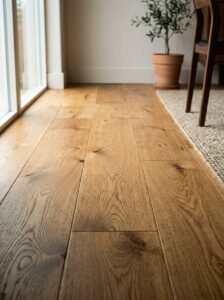
The most critical technical hurdle in a hardwood to LVP transition is managing the physical difference in thickness between the two materials:
- Solid Hardwood: Typically milled to 3/4″ (19mm) thickness.
- Engineered Hardwood: Usually ranges from 3/8″ to 5/8″ thickness.
- SPC Luxury Vinyl Plank: Typically measures between 5mm and 8mm thick (including pre-attached underlayment).
If an installer simply butts a thin LVP plank against a thick solid hardwood board, you are left with an exposed 3/8″ lip—creating an unsightly tripping hazard that wears down quickly underfoot.
How Professional Contractors Resolve Height Differences:
- Subfloor Elevation Adjustment: Before laying the thinner LVP plank, technical crews build up the underlying foundation using specialized plywood underlayment layers or self-leveling cement compounds. Equalizing subfloor heights before installation creates a virtually flush threshold between rooms.
- Precision Subfloor Foundation Check: Ensuring both foundations are completely level prevents board deflection and locking-joint failure. Executing targeted Subfloor Repair guarantees a quiet, rigid base across both materials.
- Custom-Milled Transition Strips: Where subtle height differences remain, custom-milled wood reducers or flush T-moldings stained to complement your hardwood create a smooth, safe bridge between the two surfaces.
Partnering with Experienced Local Flooring Contractors Near Me
Combining hardwood floor installation with precision LVP flooring installation requires more than basic material delivery—it demands an experienced eye for color harmony, moisture testing, and custom molding craftsmanship.
When searching for reliable flooring contractors near me in communities across Mebane, Burlington, Morrisville, or Fuquay-Varina, partnering with dedicated local craftsmen guarantees tailored guidance for your home’s layout.
Every project we undertake at Ortiz Flooring Inc. is executed through The Peace of Mind Process. From climate-acclimating your timber to building up subfloors for flush transitions, we guarantee a clean, organized, and stress-free renovation from start to finish.
- Location: Wortham St, Durham, NC — visits by appointment only.
Ready to Harmonize Hardwood and LVP in Your Home?
Don’t compromise between natural elegance and waterproof utility. Let our expert team bring mobile samples directly to your door, evaluate your doorways, and inspect your subfloors for a seamless multi-material layout.
Let’s build a foundation you’ll love for decades.
Click Here to Request Your Free Consultation and Estimate Today