LVP and Hardwood in Morrisville, NC: What Local Homeowners Should Know
Nov 22, 2026
Written By Alvaro Ortiz | Owner of Ortiz Flooring Inc.
When comparing LVP and hardwood for a Morrisville home, it helps to start with how each room will be used rather than assuming one material is best throughout. Luxury vinyl plank (LVP) may be a practical option for kitchens, laundry rooms, and high-traffic family spaces when the product is approved for the space, while hardwood suits homeowners who want natural wood character and are comfortable with seasonal care. Stairs, open layouts, and how your family lives day to day usually decide the rest.
For homeowners in Morrisville and the surrounding Triangle area, useful questions include: Will the selected LVP suit a busy household? What maintenance will hardwood require? Can both materials work in the same home? This guide walks through how we help local homeowners think it through.
LVP or Hardwood: A Room-by-Room Way to Decide
Instead of choosing one material for the whole house, start with how each room is used:
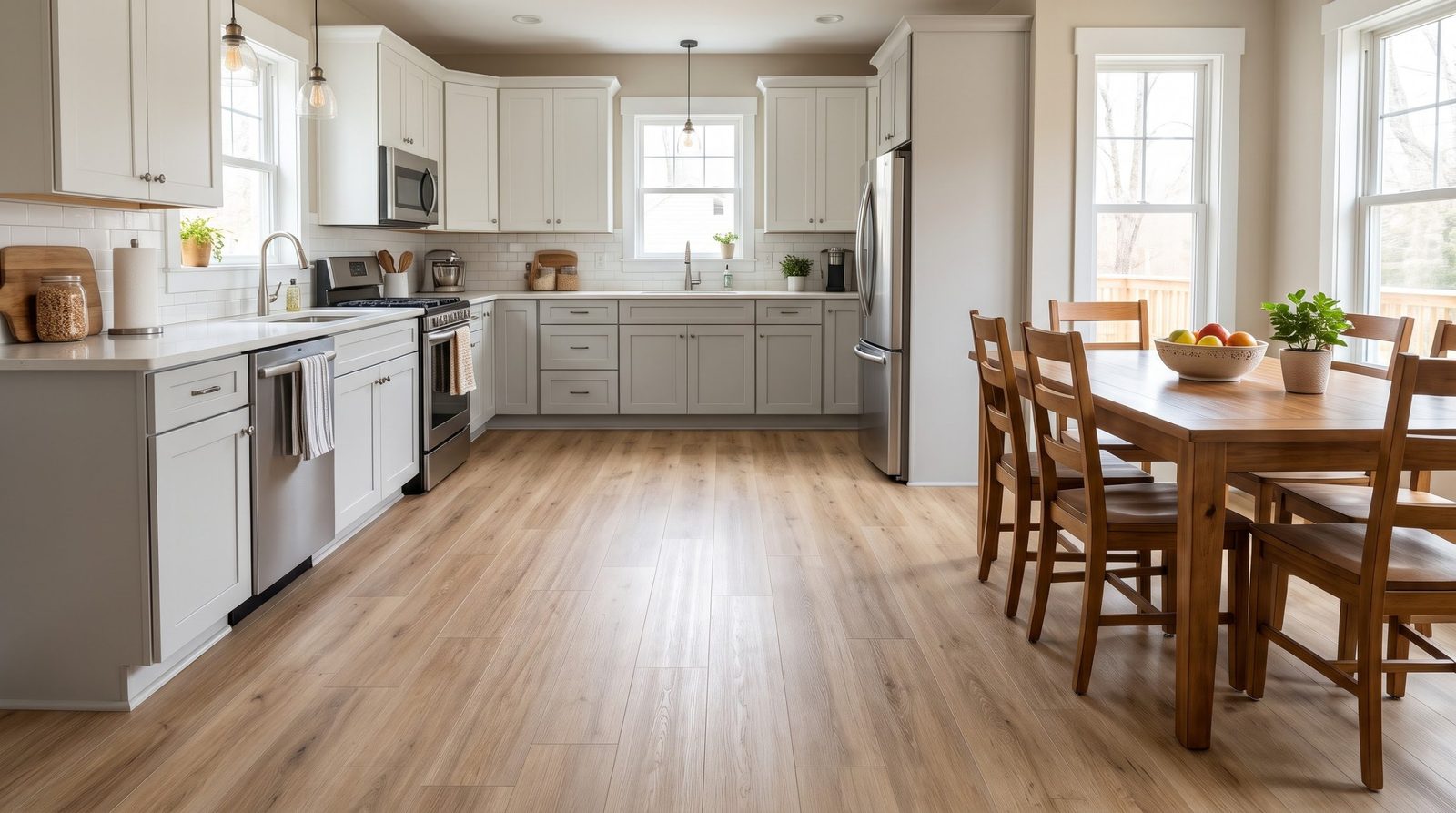
Kitchens and dining areas: Spills and constant traffic make LVP worth considering. Hardwood can also work well when the household is careful about moisture. Our guide to whether LVP is really waterproof explains what the label does and does not mean.
Laundry rooms, mudrooms, and entries: LVP may be a practical option when the selected product is approved for the space. A waterproof claim does not mean the flooring system will protect the subfloor from leaks or flooding, so remove standing water promptly and follow the manufacturer’s instructions. Our article on high-traffic entryways and mudrooms goes deeper.
Basements and below-grade spaces: Evaluate moisture conditions and test the subfloor as required by the manufacturer’s instructions before selecting a floor. Some LVP and engineered hardwood products are approved for below-grade installation, but approval is product-specific. Leaks and other moisture problems need to be corrected first, because flooring is not a moisture-control solution.
Neither choice is better for everyone. The right answer depends on your budget, your schedule, and the way you use each room.
During a home visit, we look at the layout, the number of levels, the condition of the subfloor, and where one room flows into the next. Those details often change the recommendation more than the material’s reputation does, which is why we prefer to see the space before suggesting a floor.
Open Layouts and Multi-Level Homes
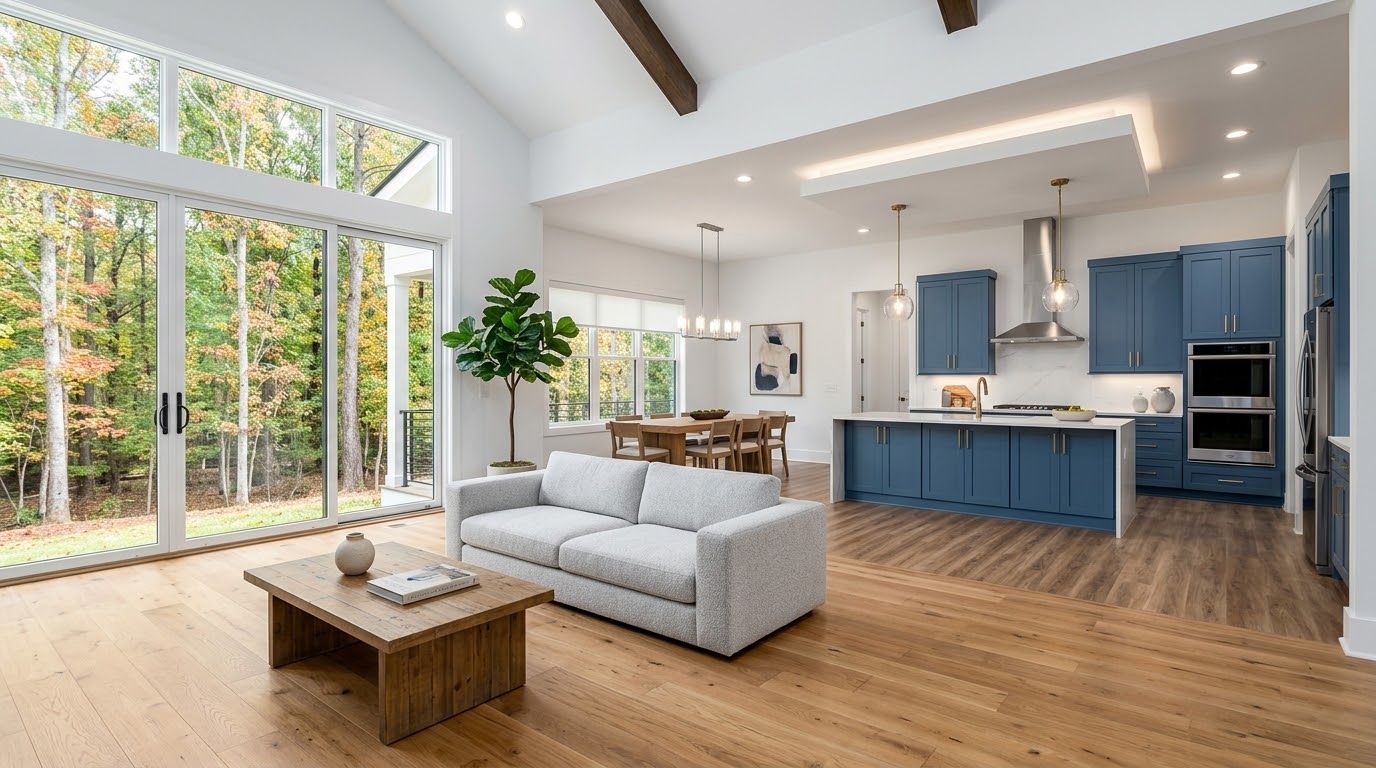
In a multi-level home, or an open layout where the kitchen, dining area, and living room connect, flooring decisions need to account for the adjoining spaces. When flooring continues through several spaces, plan both the appearance and the installation requirements. Depending on the product and layout, expansion breaks or transition profiles may be required, even where the same flooring continues from room to room, so we follow the manufacturer’s instructions.
If you are thinking about using LVP in some areas and hardwood in others, our article on mixing hardwood and LVP explains how to plan those transitions so the result looks intentional. If you are comparing the two for a shared living space, hardwood vs. LVP for open-concept living areas covers the trade-offs.
Stairs: The Detail That Pulls the Floor Together
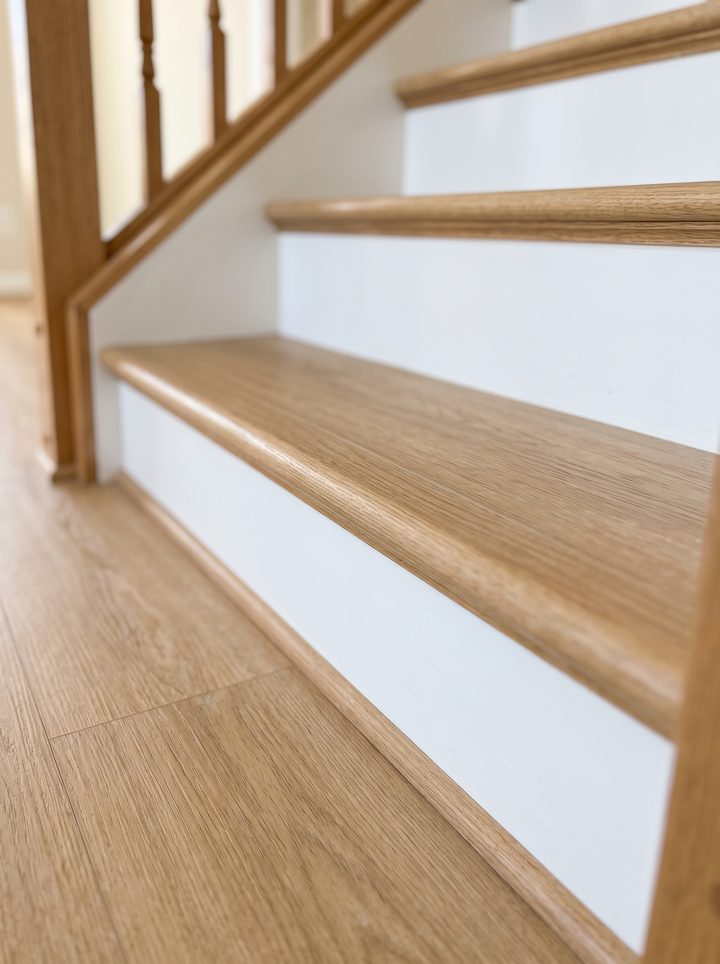
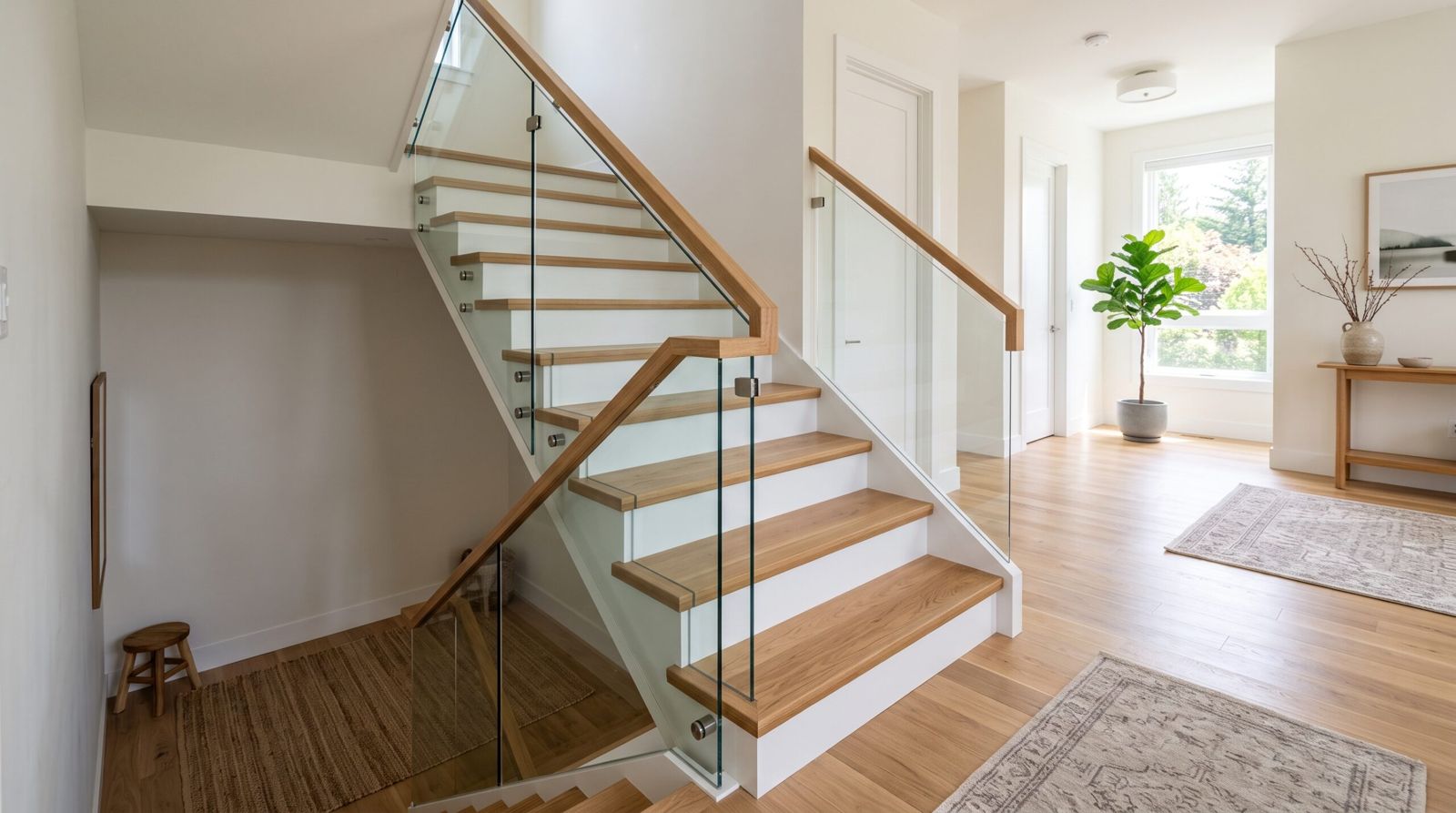
In a multi-level home, the staircase is where the flooring choice becomes most visible. Treads, risers, and nosing can coordinate with the surrounding floors or intentionally contrast with them. Product compatibility and secure installation according to the manufacturer’s instructions matter more than an exact visual match. We cover the options in our guide to upgrading staircases with hardwood and LVP and in flooring on stairs.
A Morrisville Project
One of our Morrisville projects shows how these decisions come together. The project included 1,850 sq. ft. of new flooring, the removal of approximately 902 sq. ft. of existing LVP, a floating (click) installation of the main floors, new quarter round, and a separate staircase conversion coordinated with the surrounding floors. The planks measured 9.4“ × 60”. These details describe that project, not every LVP installation.
Projects like this are a reminder that the floor and the staircase are one design decision. Planning them together helps the home look cohesive from the first step to the last.
What Hardwood Owners Should Know About North Carolina Seasons
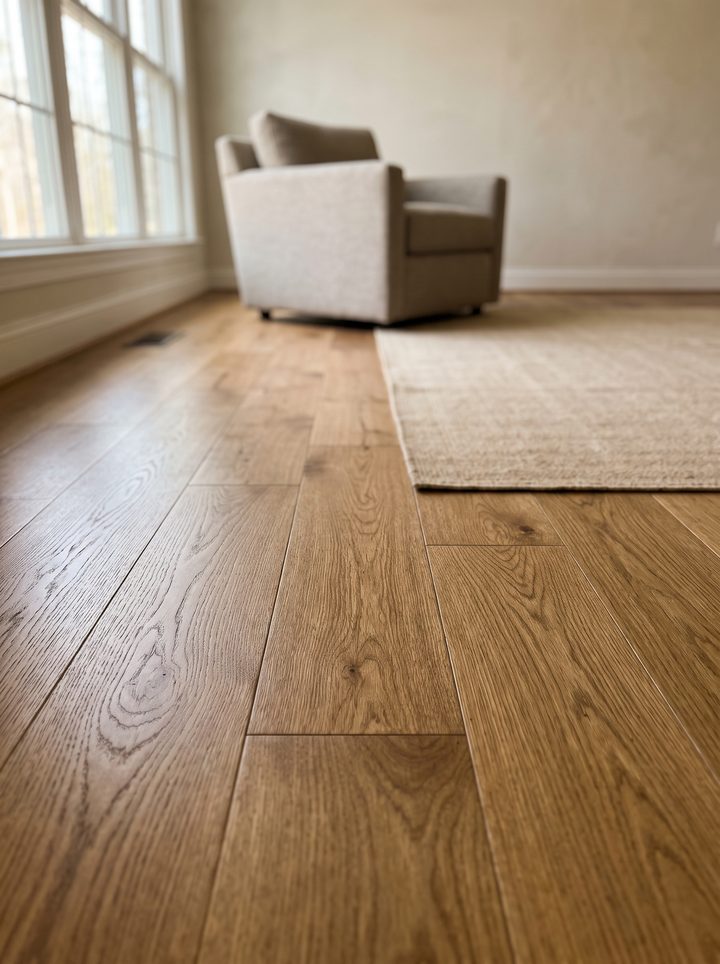
Natural wood expands and contracts as indoor moisture conditions change. Heating can lower indoor humidity in winter, while warm, humid weather can raise it, and actual conditions depend on your home’s HVAC system and moisture control. That is normal for wood, which is why it helps to monitor indoor humidity year-round and follow the manufacturer’s instructions. If you already have hardwood, or you are thinking about it, read why hardwood floors gap in winter, and compare your options in engineered vs. solid hardwood.
If you are weighing a wood-look floor against natural wood, it helps to see samples in your own light. Daylight, wall color, and furniture all change how a floor reads, so we encourage homeowners to look at a few options in the room itself before deciding.
Questions to Ask Before You Choose
A short list can save you from second-guessing later:
How will each room be used? Think about water, pets, children, and guests.
What do the manufacturer’s instructions and warranty require? Review approved locations, subfloor moisture testing and preparation, indoor conditions, installation methods, and warranty exclusions before you buy.
What is the plan for stairs and transitions? Decide early, so the whole home reads as one design.
What is the timeline? Material availability and scheduling can affect when the project starts.
Every residential project we manage is built around The Peace of Mind Process, with clear written estimates and a structured plan from start to finish.
Local Flooring Service Near Morrisville
Our central office is in Durham, and we work with homeowners throughout the Triangle. Learn more about our service in Morrisville, Holly Springs, and Fuquay-Varina, or ask us about your neighborhood during your consultation.
Frequently Asked Questions About LVP and Hardwood in Morrisville
Is LVP or hardwood better for a Morrisville home?
It depends on the room, the selected product, the condition of the subfloor, and your maintenance preferences. LVP may suit kitchens, laundry rooms, and busy family spaces when it is approved for those uses. Hardwood may suit living areas and bedrooms when indoor moisture conditions are controlled. The two materials can also be combined, with transitions planned in advance.
Can I use LVP on my stairs?
In some cases, yes. LVP may be used on stairs only when the selected product and stair components are approved for that application. We follow the manufacturer’s instructions for attachment, nosing, and transitions, and we do not assume the method used on the main floor also applies to stairs. Coordinating finishes may be available, but an exact match is not guaranteed.
Does Ortiz Flooring work in Morrisville?
Yes. We work with homeowners across the Triangle, including Morrisville. Our office is in Durham on Wortham St, with visits by appointment.
Ready to Choose the Right Floor?
If you are comparing LVP and hardwood for your Morrisville home, the best first step is a conversation about your space. We welcome visits by appointment at our Durham location on Wortham St, or we can start with a consultation at your home.
Is LVP really waterproof? Learn what the label means, where luxury vinyl plank performs well in North Carolina homes, and what to check before you install it.
In multi-level homes across the North Carolina Triangle, staircases connect main-floor living areas with upstairs spaces. In many homes, they are visible from entryways and main living areas, making them an important part of…
When planning a home remodel in the North Carolina Triangle, many homeowners find themselves caught between two appealing surface options: the timeless architectural prestige of natural hardwood and the 100% waterproof resilience of Luxury…
Read more
What Our Clients Say
“
Alvaro and his crew were unbelievably efficient. We got six quotes. Ortiz was the most honest, affordable and fastest timeline. Plus, Alvaro was at our home to give us that quote the quickest. We…Alvaro and his crew were unbelievably efficient. We got six quotes. Ortiz was the most honest, affordable and fastest timeline. Plus, Alvaro was at our home to give us that quote the quickest. We were in an emergency situation: a flood on the first floor of a disabled household, with a lot of chemical and environmental sensitivities. Alvaro walked us through the options and even sent his nephew back later with more samples for us to consider. To top it all off, the work was executed exactly as we expected and is beautiful! Don’t waste time talking to anyone else. Hire Ortiz!
Mr Ortiz and his crew were awesome. We couldn’t be more satisfied with our new subfloor repair in the kitchen and LVP flooring throughout our entire lower level of home. Absolutely beautiful work…Mr Ortiz and his crew were awesome. We couldn’t be more satisfied with our new subfloor repair in the kitchen and LVP flooring throughout our entire lower level of home. Absolutely beautiful work. Very professional and efficient.
Highly recommend! From start to finish, the experience was fantastic! The team was professional, friendly, and paid great attention to detail. The floors look beautiful, and the installation process…Highly recommend! From start to finish, the experience was fantastic! The team was professional, friendly, and paid great attention to detail. The floors look beautiful, and the installation process was smooth and stress-free. It’s amazing what a difference new flooring can make! So happy with the results and would absolutely recommend this company to anyone looking to upgrade their floors!
Great experience with LVP flooring on our second floor and stairs! We’re very happy with the entire job. From the start, Álvaro, the owner, was very attentive throughout the sales process, and his…Great experience with LVP flooring on our second floor and stairs! We’re very happy with the entire job. From the start, Álvaro, the owner, was very attentive throughout the sales process, and his showroom has a great variety of flooring options, which helped us find exactly what we wanted.
One thing we want to highlight: Álvaro was one of the few who explained in detail how the stairs would be done and gave us a quote for that part of the work. Very few companies in the Raleigh-Durham area install LVP on stairs, so it was a relief to find someone who actually did, and with full transparency. His prices are also very competitive.
The installation was excellent and extremely detailed. Jorge, who installed the flooring, was always attentive and did an impeccable job. You can see the care and professionalism in every detail, especially on the stairs. We highly recommend them! We couldn’t be happier with the result.
The best flooring contractor in the area, period. Having worked with other contractors, might be the best experience we have had working with a contractor.
I couldn't be happier with Ortiz Flooring. We are listing and needed carpets replaced and scratched on our difficult floor 'fixed' somehow. They offered to remove carpets before the painters came in…I couldn't be happier with Ortiz Flooring. We are listing and needed carpets replaced and scratched on our difficult floor 'fixed' somehow. They offered to remove carpets before the painters came in and do their job after. The carpet selection was very good quality, installation was fast and perfect. The owner returned after to complete the wood flooring touch ups which was not an easy job! I'm so happy with them and I'd select them in the future with no hesitation!
I loved working with this company! Within a week I got a quote, ordered the flooring of my choice and had it installed. The installer was on time and diligent and the only way I can tell he was here…I loved working with this company! Within a week I got a quote, ordered the flooring of my choice and had it installed. The installer was on time and diligent and the only way I can tell he was here is that my floor is now solid and beautiful. Thanks Guys.
We had the pleasure of having Ortiz Flooring in Durham NC to install our luxury vinyl plank floors in our home. The crew did a magnificent job! They were very professional, knowledgeable, punctual…We had the pleasure of having Ortiz Flooring in Durham NC to install our luxury vinyl plank floors in our home. The crew did a magnificent job! They were very professional, knowledgeable, punctual, paid close attention to detail, cleaned up after themselves, and friendly!! The whole Team was great. Mr. Ortiz is so patient and kind as I was having a hard time making a decision on the floor. He was very helpful. Kristin the admin assistant was awesome with communicating with me via email with all the updates and was also very kind! She was a ray of sunshine.☀️ Haroldo and Alejandro were great installers!! They put down the shoe molding the best of anyone I have ever seen! Our floors turned out beautiful and we are thrilled with them! I would not hesitate to choose this Company again! Kudos to all of Ortiz Flooring! ⭐️⭐️⭐️⭐️⭐️
The whole Ortiz Flooring team was great to work with! I really appreciated Alvaro answering all my questions and helping me make the best choice based on what I needed, liked, and could afford. My…The whole Ortiz Flooring team was great to work with! I really appreciated Alvaro answering all my questions and helping me make the best choice based on what I needed, liked, and could afford. My carpet install was excellent and the team was really efficient! The price is really reasonable and their work is high quality. I will definitely be calling Ortiz Flooring again for future projects!
We had a great experience with Alvaro Ortiz. He was very professional. Got the work done very quickly and very well. We installed LVP flooring with him. Would definitely recommend and use him again…We had a great experience with Alvaro Ortiz. He was very professional. Got the work done very quickly and very well. We installed LVP flooring with him. Would definitely recommend and use him again in the future for any of our flooring needs!
They did an amazing job on our flooring job. We had a whole house project, including hardwood on the first floor, new carpet upstairs and hard flooring in the office. They also pulled up carpet from…They did an amazing job on our flooring job. We had a whole house project, including hardwood on the first floor, new carpet upstairs and hard flooring in the office. They also pulled up carpet from our stairs and replaced with wood. It is absolutely beautiful, and has changed the entire look of our home. They were professional, clean and communication was good. I would highly recommend!!!
I highly recommend Alvaro and his wonderful team! They met all my needs, and the new floor looks beautiful. Thank you, Kristin, for the clear pricing. And thank you, Diego and Max, for the amazing…I highly recommend Alvaro and his wonderful team! They met all my needs, and the new floor looks beautiful. Thank you, Kristin, for the clear pricing. And thank you, Diego and Max, for the amazing work!
Had a great experience with Ortiz Flooring! They installed hardwood in our entire upstairs before we moved into our new house. Things that stood out to me: They were able to get our floor installed…Had a great experience with Ortiz Flooring! They installed hardwood in our entire upstairs before we moved into our new house. Things that stood out to me: They were able to get our floor installed very quickly under time pressure of us needing to move in; Alvaro (the owner) and his team clearly want every job to be done right, a vanishingly rare trait in a contractor; there were height differences on a few planks, they returned and fixed immediately; their pricing is fair especially for the quality of their work; the floor is really beautiful, which, in the end is what matters. Additionally, in part I chose Ortiz because they are a local, family-run operation, trying to do good work at a fair price. Would strongly recommend, and I will use them myself in the future.
Alvaro and his team at Ortiz Flooring were absolutely first class from start to finish. They completely repaired the hardwood floors in our guest room and seamlessly matched the stain to the rest of…Alvaro and his team at Ortiz Flooring were absolutely first class from start to finish. They completely repaired the hardwood floors in our guest room and seamlessly matched the stain to the rest of the house and they finished the whole job in just 3 days. The crew was courteous, professional, and prompt every step of the way, and the craftsmanship speaks for itself. If you're looking for a flooring team that treats your home like their own and delivers exceptional work on time, look no further. Ortiz Flooring has earned my business for life! Highly, highly recommend.
Alvaro got me on his calendar almost immediately. The service was quick and efficient!! I let them work on two rooms while I was at work, which was really nice. The guys replaced the subfloor…Alvaro got me on his calendar almost immediately. The service was quick and efficient!! I let them work on two rooms while I was at work, which was really nice. The guys replaced the subfloor, installed new LVP, baseboards, and quarter round. It looks amazing! Very reasonable price for the job
Had a great experience with Ortiz Flooring! They installed hardwood in our entire upstairs before we moved into our new house. Things that stood out to me: They were able to get our floor installed…Had a great experience with Ortiz Flooring! They installed hardwood in our entire upstairs before we moved into our new house. Things that stood out to me: They were able to get our floor installed very quickly under time pressure of us needing to move in; Alvaro (the owner) and his team clearly want every job to be done right, a vanishingly rare trait in a contractor; there were height differences on a few planks, they returned and fixed immediately; their pricing is fair especially for the quality of their work; the floor is really beautiful, which, in the end is what matters. Additionally, in part I chose Ortiz because they are a local, family-run operation, trying to do good work at a fair price. Would strongly recommend, and I will use them myself in the future.
Alvaro and his team at Ortiz Flooring were absolutely first class from start to finish. They completely repaired the hardwood floors in our guest room and seamlessly matched the stain to the rest of…Alvaro and his team at Ortiz Flooring were absolutely first class from start to finish. They completely repaired the hardwood floors in our guest room and seamlessly matched the stain to the rest of the house and they finished the whole job in just 3 days. The crew was courteous, professional, and prompt every step of the way, and the craftsmanship speaks for itself. If you're looking for a flooring team that treats your home like their own and delivers exceptional work on time, look no further. Ortiz Flooring has earned my business for life, they're who I'll call for anything we need going forward. Highly, highly recommend.
We had a really great experience with Ortiz flooring! We needed our oak floors refinished and they did a really beautiful job. They actually went above and beyond what we originally asked and all for…We had a really great experience with Ortiz flooring! We needed our oak floors refinished and they did a really beautiful job. They actually went above and beyond what we originally asked and all for a very reasonable price. They filled in all the gaps, repaired damaged boards, and even let us use a stain that we already had to help us save some money we'd spent already on the project. It really became apparent to us how great of a job they did when we would visit our friends and family that just had their floor redone and it would already be scratched up or didn't really look finished unlike ours! We would absolutely use them again!
We had our upper floor carpet replaced with LVP from these recently and they were amazing! Workers were super nice and quick, the managing/coordinating staff were extremely friendly, and they wanted…We had our upper floor carpet replaced with LVP from these recently and they were amazing! Workers were super nice and quick, the managing/coordinating staff were extremely friendly, and they wanted to make sure we absolutely loved our floors before closing things out. 10/10 experience!
My floors look perfect. I chose to let Ortiz crew work on my home when I was at work and it was great to come home to the finished product! I had some concerns about previous moisture damage and they…My floors look perfect. I chose to let Ortiz crew work on my home when I was at work and it was great to come home to the finished product! I had some concerns about previous moisture damage and they took care of that before finishing the install. Every part of this process was easy and I'll be using Ortiz for future projects.
Álvaro and his team at Ortiz did an awesome job replacing my carpet upstairs and installing hardwoods in two downstairs bedrooms. Everything looks flawless. They matched the stain of the existing…Álvaro and his team at Ortiz did an awesome job replacing my carpet upstairs and installing hardwoods in two downstairs bedrooms. Everything looks flawless. They matched the stain of the existing hardwoods perfectly. The communication from Álvaro and his office staff was always prompt, friendly, and professional. I would choose this company to do any future flooring projects without hesitation.
We had our flooring changed to lvp and install new carpet! Alvaro provided a very reasonable price from all the other company i have asked for an estimate. They are easy to work with and know what…We had our flooring changed to lvp and install new carpet! Alvaro provided a very reasonable price from all the other company i have asked for an estimate. They are easy to work with and know what they are doing. I would recommend them to anyone.
Alvaro and his team were fantastic! We love how our floors came out, he made the entire experience seamless. I recommend letting him give a quote if you’re trying to get your floors re-done.
WouId I use them again? Absolutely! Would I recomment them to my mom? Absolutely! They were fair in pricing, dependable, on time, excellent skillwise, and cleaned up after themselves (I can't say…WouId I use them again? Absolutely! Would I recomment them to my mom? Absolutely! They were fair in pricing, dependable, on time, excellent skillwise, and cleaned up after themselves (I can't say this for other projects/companies which is why I mention it.). Alvaro was very professional and listened to me and my needs. I had the entire 2-story home of flooring done and I can't say a single negative thing. Thank you so much!
Ortiz Flooring was absolutely great to work with! Easy to communicate and coordinate with and very attentive to the needs of our project. They installed a Forbo Marmoleum tile floor in our garage so…Ortiz Flooring was absolutely great to work with! Easy to communicate and coordinate with and very attentive to the needs of our project. They installed a Forbo Marmoleum tile floor in our garage so swiftly and seamlessly and we could not be happier with the results. We will definitely work with them again. High recommend.
My experience at every step of the process was exactly what one would expect from a professional. I submitted a request for a quote and received a quick response to schedule an onsite appraisal…My experience at every step of the process was exactly what one would expect from a professional. I submitted a request for a quote and received a quick response to schedule an onsite appraisal shortly thereafter. Alvaro came for a consult that was efficient, informative and kind. When I decided to go forward with Ortiz Flooring, the process was very efficient: there were no gaps in communication and they acknowledged all down payments. Their communication was the best I’ve ever seen—that’s very reassuring. They notified me when materials were received. And the install exceeded expectations-it took only one day (small job) when I expected it might run over. Alvaro’s crew worked efficiently and well: they take very good care that all is done well and any loose ends are swiftly secured. Thank you. That kind of service is rare.
We are selling our house and needed carpet replaced asap. Our realtor recommended Ortiz Flooring. They came out for a quote within an hour of contacting them, gave me a quote on the spot and were…We are selling our house and needed carpet replaced asap. Our realtor recommended Ortiz Flooring. They came out for a quote within an hour of contacting them, gave me a quote on the spot and were able to fit us in a few days later. They were in and out the same day, moved all our furniture, cleaned up, and did an amazing job! I highly recommend!
We used Ortiz flooring to replace our old carpet and install LVP in our bathrooms. The team were punctual, hard working and the quality of the installation was excellent.
We had an excellent experience with this flooring company from start to finish. After a dishwasher leak damaged the wood flooring around our kitchen island, we needed a repair that would blend…We had an excellent experience with this flooring company from start to finish. After a dishwasher leak damaged the wood flooring around our kitchen island, we needed a repair that would blend seamlessly with the rest of our home. Not only did they replace the affected area, but they also sanded and stained the entire first floor to ensure a perfect match—and the results were flawless. Their team was professional, respectful, and always on time. Communication throughout the process was clear and consistent, which made everything much less stressful. We were so impressed with the quality of their work that we hired them to refinish our stairs, and they did another outstanding job. If you’re looking for a company that truly takes pride in their craftsmanship and customer service, I highly recommend them.
I can’t say enough about Ortiz Flooring! His crew did an absolutely amazing job. They completed our floors in just one day, with incredible attention to detail. They even took care of removing and…I can’t say enough about Ortiz Flooring! His crew did an absolutely amazing job. They completed our floors in just one day, with incredible attention to detail. They even took care of removing and discarding the old floors, making the whole process completely stress-free. The new floors look stunning, exactly what we hoped for and more. I highly recommend Ortiz Flooring to anyone looking for quality, professionalism, and beautiful results!
After submitting a request online the owner contacted me directly, was quick to schedule an appointment to review my repair job and provided a quote on the spot. Scheduling the work was quick and…After submitting a request online the owner contacted me directly, was quick to schedule an appointment to review my repair job and provided a quote on the spot. Scheduling the work was quick and easy (made it within the same week as the quote - though I did already have replacement flooring on hand). The team showed up for the job on time and were very quick to complete, with the repair looking seamless within the existing floor. I am overall very happy with the work from Ortiz!
We purchased our house 1.5 yrs ago. LOTS of work to be done, with many projects as DIY and some outsourced. Therefore, we consider the ROI on each project. Our Goal: Replace heavily trafficked carpet…We purchased our house 1.5 yrs ago. LOTS of work to be done, with many projects as DIY and some outsourced. Therefore, we consider the ROI on each project. Our Goal: Replace heavily trafficked carpet areas -family room, stairs & upstairs hall with LVP. From start to finish, communication with Alvaro (owner) and Kristin (Administrative Assistant), was excellent. Emails were responded to within minutes or at most a few hours. We liked the flexibility of our purchasing the LVP through Lowes, and using my husband’s veteran discount. Ortiz flooring picked up order.
I wanted to remove a small area of tile and replace it with hardwood flooring to match the existing hardwoods. Although the existing flooring was over 15 years old, Ortiz Flooring matched it…I wanted to remove a small area of tile and replace it with hardwood flooring to match the existing hardwoods. Although the existing flooring was over 15 years old, Ortiz Flooring matched it perfectly. The quote was complete and easy to understand. The craftsmen were talented, professional, and polite. The work was completed on the promised timeline. It was a great experience. I highly recommend Ortiz Flooring.
Had some water damage in a bathroom that required repair. After submitting a request online the business owner reached out quickly and setup a consolut. He was punctual and very helpful to quickly…Had some water damage in a bathroom that required repair. After submitting a request online the business owner reached out quickly and setup a consolut. He was punctual and very helpful to quickly review the work and provide a quote. The team was able to come out same week (I had the material in house already) and finish the job quickly. Overall I was very happy with the work and quick response from the team.
Alvaro stretched our carpet in 3 rooms and also did repair on our hardwood floors. The team he sent to do the job were highly skilled, paid attention to detail, and did an incredible job on both the…Alvaro stretched our carpet in 3 rooms and also did repair on our hardwood floors. The team he sent to do the job were highly skilled, paid attention to detail, and did an incredible job on both the carpet and hardwood. The hardwood repair was not easy and yet they were smart in how they approached it, really cared about the aesthetics and cleaned up really well. They took pride in their work, which you don't often see.
I am pleased with Ortiz Flooring services replacing our second floor carpet. Mr. Ortiz was helpful in scheduling, discussing alternatives and providing samples. For us this step can sometimes be…I am pleased with Ortiz Flooring services replacing our second floor carpet. Mr. Ortiz was helpful in scheduling, discussing alternatives and providing samples. For us this step can sometimes be difficult and Mr Ortiz made it pleasant and effective. Diego and his crew arrived as scheduled and worked well as a team. They did a beautiful installation and clean up of old carpet and other debris. Diego's team were professional and courteous. The quality of carpet, installation and fair pricing is impressive. We enjoyed working with Ortiz Flooring and plan to use them for our next project.
We are very happy with our new flooring. The quality is excellent, and it completely changed the look of our home. Installation was done professionally and on time. It’s easy to clean and looks…We are very happy with our new flooring. The quality is excellent, and it completely changed the look of our home. Installation was done professionally and on time. It’s easy to clean and looks beautiful. Highly recommend!
Mr Ortiz was very patient and professional in answering my many questions about our floor replacement plans. Was able to adjust as our plans evolved. His crews were polite and very thorough. Would…Mr Ortiz was very patient and professional in answering my many questions about our floor replacement plans. Was able to adjust as our plans evolved. His crews were polite and very thorough. Would use again.
I am pleased with Ortiz Flooring services replacing our second floor carpet. Mr. Ortiz was helpful in scheduling, discussing alternatives and providing samples. For us this step can sometimes be…I am pleased with Ortiz Flooring services replacing our second floor carpet. Mr. Ortiz was helpful in scheduling, discussing alternatives and providing samples. For us this step can sometimes be difficult and Mr Ortiz made it pleasant and effective. Ortiz and his crew arrived as scheduled and worked well as a team. They did a beautiful installation and clean up of old carpet and other debris. Ortiz's team were professional and courteous. The quality of carpet, installation and fair pricing is impressive. We enjoyed working with Ortiz Flooring and plan to use the
Mr. Ortiz listened carefully to me and clearly explained flooring products to me so I could make the best decision for my home. His crew was on time, polite and courteous. I was impressed with their…Mr. Ortiz listened carefully to me and clearly explained flooring products to me so I could make the best decision for my home. His crew was on time, polite and courteous. I was impressed with their organization and efficiency of tasks to remove old flooring and install new flooring. Great pricing and excellent service ! !
Alvaro and his crew were kind, knowledgeable, prompt, and meticulous. He was able to squeeze our project in before the holidays and our home looks beautiful! Thank you!
Mr. Ortiz and his crew were kind, knowledgeable, prompt, and meticulous. He was able to squeeze our project in before the holidays and our home looks beautiful! Thank you!
Tuvimos una excelente experiencia con Álvaro de Ortiz Flooring. Hay muchas opciones excelentes en la sala de exposición y son muy profesionales. Lo recomiendo ampliamente.
I am so pleased with Ortiz Flooring. Alvaro the owner came to our house for quote and he brought samples. The job was done when and as contractor stated and looks great! Highly recommend for your…I am so pleased with Ortiz Flooring. Alvaro the owner came to our house for quote and he brought samples. The job was done when and as contractor stated and looks great! Highly recommend for your flooring needs
We recently had the pleasure of working with Ortiz Flooring Company, and we couldnt be happier with the results! Their team did an absolutely excellent job professional, detail-oriented, and…We recently had the pleasure of working with Ortiz Flooring Company, and we couldnt be happier with the results! Their team did an absolutely excellent job professional, detail-oriented, and efficient from start to finish. The craftsmanship and quality of the work exceeded our expectations. They were respectful of our space, cleaned up thoroughly, and delivered everything on time. If youre looking for reliable and skilled flooring experts, Ortiz Flooring is the one to call! Highly recommended!
Craftsmanship & Customer Service Still Exist! Background – We purchased our house 1.5 yrs ago. LOTS of work to be done, with many projects as DIY and some outsourced. Therefore, we consider the ROI…Craftsmanship & Customer Service Still Exist! Background – We purchased our house 1.5 yrs ago. LOTS of work to be done, with many projects as DIY and some outsourced. Therefore, we consider the ROI on each project. Our Goal: Replace heavily trafficked carpet areas -family room, stairs & upstairs hall with LVP. From start to finish, communication with Alvaro (owner) and Kristin (Administrative Assistant), was excellent. Emails were responded to within minutes or at most a few hours. We liked the flexibility of our purchasing the LVP through Lowes, and using my husband’s veteran discount. Ortiz flooring picked up order. Diego and Adrian were the two young men who removed old carpeting, installed the underlayment, LVP, quarter round molding, new risers & painted. What a work ethic! They were extremely conscientious, pleasant, and made sure every measurement was correct. If not quite right, a piece was re-cut. The job took two days. Note to Photos: I was so busy painting the Family Room, I forgot to take before shot. Huge improvement though. Bottomline – Would we use Ortiz Flooring again? Absolutely!
I had an excellent experience with Ortiz Flooring! From start to finish, their team was professional, efficient, and highly skilled. They expertly removed old carpet and damaged engineered hardwood…I had an excellent experience with Ortiz Flooring! From start to finish, their team was professional, efficient, and highly skilled. They expertly removed old carpet and damaged engineered hardwood, leveling the concrete to perfection before installing stunning luxury vinyl plank (LVP) flooring throughout our home. The attention to detail was remarkable, and the end result is absolutely beautiful. Their dedication to quality and customer satisfaction was evident every step of the way. I couldn’t be happier with their work and would highly recommend them to anyone looking for high-quality flooring services!